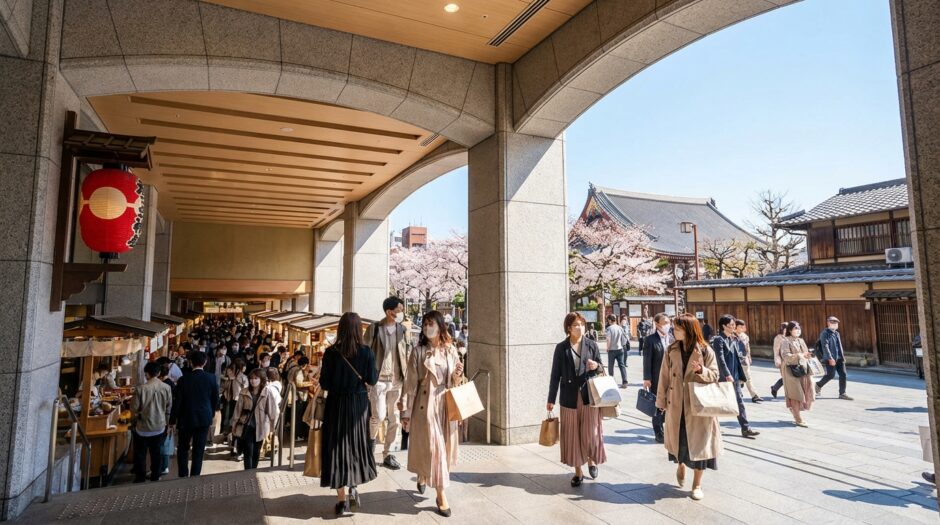

Welcome to the culinary basement of your dreams! 🍱🌸 If you’ve ever stepped into the basement of a major Japanese department store like Isetan, Mitsukoshi, or Takashimaya, you know that **Depachika** (a portmanteau of *Depato* – department store, and *Chika* – basement) is a sensory overload in the best way possible.
Imagine floors of meticulously crafted wagashi (Japanese sweets), glistening sashimi, steaming yakitori, and fruits that cost more than your hotel room. It is a gourmet wonderland, but for the uninitiated, it can be a social minefield. At **Japan Hacks**, we want you to navigate these aisles like a seasoned Tokyoite, not a confused tourist blocking the flow of traffic.
To ensure you get the most out of your food hall safari without accidentally offending a polite grandmother or a busy salaryman, here are the **5 common mistakes to avoid** in Japan’s underground food halls.
🇯🇵 Quick Hack Summary
- ✅ Timing is Everything: Visit at 10:00 AM for the freshest selection, or after 6:30 PM for massive discounts.
- ✅ The “No-Walk-Eat” Rule: Buying food doesn’t mean you can eat it in the aisles.
- ✅ Cash is (Still) Queen: While many take cards, smaller specialty stalls prefer the “Money Tray” exchange.
(Beginner-Friendly)
—
## 🛑 1. The “Stationary Statue” Mistake: Blocking the Flow
Depachika are high-traffic zones, especially during lunch hours (11:30 AM – 1:30 PM) and the post-work rush (5:30 PM – 7:30 PM). One of the biggest faux pas is stopping dead in the middle of a narrow aisle to check your Google Maps or marvel at a $200 melon.
In Japan, “reading the air” (*Kuuki wo yomu*) is vital. If you need to stop, pull over to a pillar or a less crowded corner.
💡 Pro-Tip:
If you see a long line snaking around a corner, it’s usually for a limited-edition seasonal sweet or a famous bakery. Don’t cut in! Look for the staff member holding a sign that says “End of the Line” (最後尾 – Saigoubi).
—
## 🍢 2. The “Finger Food” Fumble: Handling Samples Incorrectly
One of the joys of the Depachika is the *Shishoku* (samples). You’ll see toothpicks holding cubes of premium beef, tiny cups of miso soup, or slices of seasonal pear. However, there is a very specific etiquette to sampling.
試食
(Shishoku)
“Food sampling / Trial eating”
**The Etiquette Rules for Sampling:**
1. **Wait for the Invitation:** Don’t just grab. Usually, the staff will offer it to you with a bow.
2. **Use the Trash Can:** Most stalls providing samples have a tiny, almost hidden trash can for used toothpicks or cups. **Never** put your trash back on the sample tray or carry it to another stall.
3. **The “One-and-Done”:** Samples are for tasting to help you decide on a purchase, not a free buffet. Taking three or four pieces is considered very rude.
⚠️ Manner Alert!
Do not touch any unpackaged food with your bare hands. Always use the provided tongs or wait for the staff to assist you. Hygiene is paramount in Japanese food halls.
—
## 🚶♂️ 3. The “Walk and Gulp” Gaffe: Eating While Walking
This is perhaps the most common mistake foreigners make. In many Western cultures, grabbing a snack and eating it while browsing the rest of the store is normal. In Japan, eating while walking (*Tabe-aruki*) is generally looked down upon, especially in a high-end department store.
**The Japan Hack:** Most major department stores (like Takashimaya in Shinjuku or Ginza Mitsukoshi) have beautiful **rooftop gardens** (*Rooftop Hiroba*). Take your gourmet bento upstairs, enjoy the city view, and eat in peace!
—
## 💰 4. The “Full Price” Fail: Missing the Evening Discount
If you are traveling on a budget but want 5-star quality, you **must** time your visit. About 30 to 60 minutes before the department store closes (usually around 7:00 PM or 8:00 PM), the “Discount Dance” begins.
Staff will start walking around with stickers. First, it’s 10% off, then 30%, and finally, the coveted **”Hanshaku” (Half Price)** sticker.
📊 The “Bento” Price Drop (After 7 PM)
¥1,500
¥750
**The Mistake:** Waiting too long. By the time the “Half Price” stickers come out, the best items (like the premium sushi sets) are often already gone. Aim for the 20-30% discount window to get the best balance of quality and savings.
—
## 🎁 5. The “Tray Toss” & Packaging Pitfall
When you pay, you’ll notice a small tray (usually blue or leather) on the counter. **Do not hand your cash or card directly to the cashier.**
Place your money on the tray. The cashier will then take it, process the transaction, and return your change and card on the same tray, often using both hands as a sign of respect.
**The Packaging Dilemma:**
Japanese Depachika are famous for their “over-packaging.” Even a single cookie might be wrapped in three layers of paper and plastic.
* **Mistake:** Getting annoyed or trying to refuse the packaging for a gift item. In Japan, the presentation *is* part of the gift.
* **Correction:** If you are just buying a snack for yourself and want to be eco-friendly, you can say: *”Fukuro wa irimasen”* (I don’t need a bag).
—
## 🍱 Top 3 Depachika to Visit in Tokyo
1. **Isetan Shinjuku:** The “Vogue” of food halls. High-end, trendy, and incredibly beautiful.
2. **Daimaru Tokyo (Station):** Located right at Tokyo Station, this is the best place to grab a bento before hopping on the Shinkansen.
3. **Tokyu Foodshow (Shibuya):** More youthful and energetic, with a focus on “ready-to-eat” global fusion foods.
—
## 🍡 Final Thoughts: Embrace the Gourmet Labyrinth
The Depachika is more than just a place to buy food; it’s a cultural exhibition. It showcases the Japanese dedication to seasonality, aesthetics, and service. By avoiding these five common mistakes, you’ll not only save face but also unlock a deeper level of travel experience.
Remember: **Watch the flow, use the tray, and always head for the roof!**