
Imagine this: You’re standing in the neon-soaked streets of Shinjuku. You’ve seen the TikToks, you’ve read the blogs, and you’ve finally found *that* famous ramen shop. But as you turn the corner, your heart sinks. A serpentine queue of 80 people—mostly holding the same guidebooks as you—stretches around the block. The estimated wait? **Two and a half hours.**
Is the ramen good? Probably. Is it “stand-on-a-concrete-sidewalk-for-the-duration-of-a-feature-film” good? **Absolutely not.**
In Japan, ramen is the ultimate soul food. It’s designed to be fast, intense, and satisfying. The best bowls aren’t found by following the loudest influencers; they are found by following the locals. Welcome to the **Japan Hacks** guide to bypassing the hype and finding the legendary broth that locals actually eat. 🍜🌸🏯
—
🇯🇵 Quick Hack Summary
- ✅ Ditch Google Maps: Use Tabelog for authentic local ratings.
- ✅ The 3.5 Rule: In Japan, a 3.5 score is equivalent to a 4.8 on Google.
- ✅ Time it Right: Visit at 11:00 AM or 2:30 PM to avoid the “Salaryman Rush.”
- ✅ Look for “The Machine”: If there’s no ticket machine, it might be a tourist trap or a very high-end specialty shop.
(Easy-Moderate)
—
## 🛑 Stop Using Google Maps (For Now)
If you search “Best Ramen” on Google Maps in Tokyo, the top results will inevitably be places like *Ichiran*, *Afuri*, or *Rokurinsha*. While these are solid chains, they are currently under “tourist siege.”
To find where the ramen “geeks” (Otaku) go, you need to use **Tabelog**.
### Why Tabelog?
Japanese reviewers are notoriously strict. A 3.0 on Tabelog is “average but good.” A 3.5 is “excellent and worth a detour.” Anything above a 4.0 is “legendary/God-tier.” While a Google Maps 4.5 often just means “the staff speaks English,” a Tabelog 3.6 means the broth has been simmered to perfection by a master.
📊 Review Site Trust Factor
High
Variable
—
## 🕵️♂️ Look for the “Salaryman Stamp of Approval”
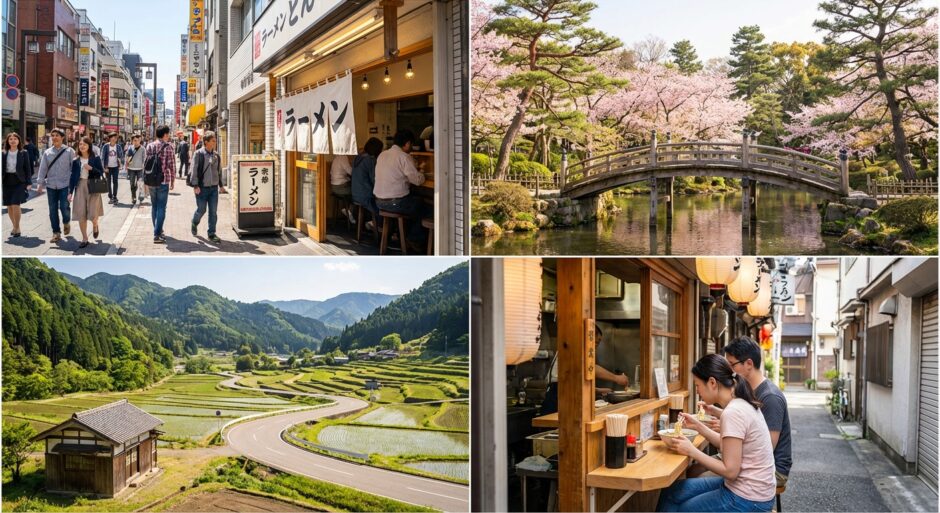
Want to find the best ramen in 30 seconds? Walk two blocks away from the main tourist landmark (like the Shibuya Crossing or the Kaminarimon Gate) and look for a shop with three or four men in dark suits standing outside.
Japanese office workers (Salarymen) have a limited lunch break. They will not wait two hours, but they *demand* high quality for their 1,000 yen. If a shop has a fast-moving line of locals in suits, you’ve hit gold.
穴場
(Anaba)
“A little-known good place” / “Hidden Gem”
—
## ⏰ Timing is Your Secret Weapon
The “Golden Hour” of ramen queues is between 12:00 PM and 1:30 PM (lunch rush) and 7:00 PM to 9:00 PM (dinner rush). If you show up at 12:15 PM, you are competing with every office worker in the district.
**The Pro Hack:**
* **Early Bird:** Many top-tier shops open at 11:00 AM. Arrive at 10:45 AM, and you’ll likely be in the first seating.
* **The “Afternoon Lull”:** 2:30 PM is the sweet spot. The lunch crowd has gone back to work, and the shop hasn’t closed for the mid-afternoon break yet (most shops close between 3:00 PM and 5:30 PM).
💡 Pro-Tip:
Check the shop’s Instagram or Twitter (X) before going. Many “Anaba” shops are run by a single chef who might close early if the soup runs out. Look for the phrase “完売” (Kanbai)—it means they are sold out for the day!
—
## 🎫 Cracking the Ticket Machine Code
Most authentic local shops use a vending machine (Vending Machine Ticket System) to take orders. This can be intimidating if there are no English translations. Don’t panic! Usually, the **top-left button** is the shop’s signature “recommended” bowl.
—
## 🍜 Regional Wisdom: What to Eat Where
If you want to avoid queues, eat what the region is famous for *outside* of the most famous shops.
* **In Tokyo:** Look for **Tsukemen** (dipping noodles). While *Rokurinsha* in Tokyo Station has a massive line, there are dozens of shops in neighborhoods like **Ikebukuro** or **Nakano** that serve equally thick, fish-and-pork broths with zero wait.
* **In Fukuoka:** Skip the “Stadium” Ichiran. Go to a small “Yatai” (food stall) in **Nakasu** or a tiny shop near **Tenjin Station**.
* **In Sapporo:** Head to **Ramen Shingetsu** or explore the **Susukino** area late at night. Miso ramen is the king here.
⚠️ Manner Alert!
Ramen shops are “Eat and Go” establishments. Especially in local gems with only 8 seats, it is considered rude to sit and chat or use your phone for long periods after you’ve finished your bowl. Eat, enjoy the “Omotenashi” (hospitality), and clear your seat for the next person!
—
## 🛠 The “Station Hack”
One of the best-kept secrets in Japan is that major train stations are often built *on top* of ramen paradises. However, don’t go to the “Ramen Street” (which is marketed to tourists). Instead, look for the **”Ekichika”** (Station Basement) areas where the commuters eat.
In places like **Shinjuku Station** or **Tokyo Station**, if you wander into the underground labyrinths away from the main JR gates, you will find tiny, 6-seat counters serving steaming bowls of Shoyu ramen for 700 yen. No line, no fuss, just pure flavor.
### Comparison: The Tourist Experience vs. The Japan Hack
📊 Time/Value Comparison
150 Minutes
25 Minutes
—
## 🏁 Conclusion: Trust Your Senses
The best ramen I’ve ever had in Japan wasn’t in a guidebook. It was a tiny shop in a residential alley in Setagaya. There was no sign in English, no queue, and the chef didn’t speak a word of my language. But the smell of simmered pork bones wafting into the street was undeniable.
By using **Tabelog**, timing your visits to the **afternoon lull**, and looking for the **Salaryman Stamp of Approval**, you’ll discover that Japan’s ramen culture is far deeper and more rewarding than what you see on a “Top 10” list.
Now, go forth, find your *Anaba*, and remember: **Slurping isn’t just allowed—it’s a compliment to the chef!**