
🌸 🏯 🍜 **Welcome to Japan Hacks!**
Oh no! You’ve been walking 20,000 steps a day through the neon streets of Shinjuku, eating your weight in ramen, and suddenly it hits you: a nagging headache, a scratchy throat, or the dreaded “traveler’s tummy.” You duck into a brightly lit, energetic store with “DRUG” written on the sign, expecting a quick fix.
But wait! You’re suddenly surrounded by 50 variations of “cold medicine,” none of which look familiar, and the packaging is a sea of Kanji.
Navigating a Japanese pharmacy (*Yakkyoku*) or drugstore (*Doraggusutoa*) is an adventure in itself. To ensure you get back to your sightseeing ASAP, we’ve rounded up the **5 common mistakes travelers make** when buying medicine in Japan. Let’s get you healed the “Smart Way!”
🇯🇵 Quick Hack Summary
- ✅ Know your “Classes”: Not all meds are on the open shelves; some require a pharmacist.
- ✅ Dosage Check: Japanese doses are often milder than Western counterparts.
- ✅ Tax-Free Trap: Don’t open your medicine if you bought it tax-free!
(Moderate)
—
## 1. 🏥 Confusing the “Drugstore” with the “Prescription Pharmacy”
In many countries, a pharmacy is a pharmacy. In Japan, there is a distinct difference between a **Drugstore** (like Matsumoto Kiyoshi, Welcia, or Sundrug) and a **Dispensing Pharmacy** (*Chōzai Yakkyoku*).
Travelers often walk into a small clinic-attached pharmacy expecting to browse for ibuprofen, only to find they only handle doctor’s prescriptions. Conversely, they go to a massive drugstore looking for high-strength medication that requires a prescription.
💡 Pro-Tip:
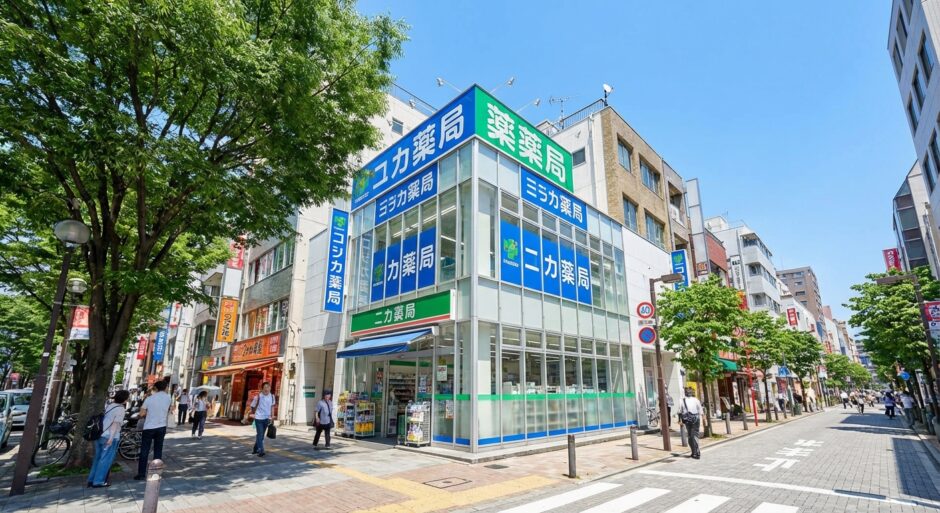
Look for the “Big Three”: Matsumoto Kiyoshi (Yellow signs), Daikoku Drug (Orange/Blue), and Welcia. These are “one-stop shops” for tourists and usually have multi-lingual signs.
—
## 2. 🚦 Ignoring the “Class System” of Japanese Meds
Japan categorizes OTC medicines into three distinct classes based on their strength and potential side effects. If you are looking for something “strong” (like *Loxonin* for pain), you can’t just grab it and go to the self-checkout.
* **Class 1:** Strongest OTC meds. **Must** be sold by a pharmacist. If the pharmacist is on a break or off-duty (usually after 7 PM), the Class 1 section will be literally locked or covered with a net.
* **Class 2:** Standard strength (cold meds, most painkillers). Registered sellers can assist.
* **Class 3:** Mild (Vitamin supplements, eye drops). Grab and go.
📊 Ease of Purchase by Class
Very Easy
Easy
Requires Pharmacist
**Mistake:** Waiting in a long line only to be told you can’t buy the medicine because the pharmacist isn’t there. Always check for a “Pharmacist on Duty” sign!
—
## 3. 🗣️ Relying Purely on Google Translate (Without Context)
Google Lens is a lifesaver, but it can be hilariously (and dangerously) wrong with medical Kanji. Translating “stomach ache” might give you medication for “excess stomach acid” when you actually have “motion sickness.”
In Japan, symptoms are often described using onomatopoeia (sound words).
* **Zuki-zuki:** Throbbing pain (headache).
* **Kiri-kiri:** Sharp, stabbing pain (stomach).
* **Gabi-gabi:** Dry, scratchy (throat).
If you don’t use the right “sound,” you might get the wrong box!
薬局
(Yakkyoku)
“Pharmacy” / “Drugstore”
—
## 4. 💊 Assuming the “Japan Dose” is the Same as Home
This is a big one. Generally speaking, Japanese OTC medications have **lower dosages** of active ingredients than those in the US, UK, or Australia. This is due to stricter health regulations and the generally smaller average body weight of the domestic population.
**The Mistake:** Taking the Japanese recommended dose and thinking “this isn’t working,” then doubling it without checking.
Alternatively, some Japanese medicines contain ingredients that are *prohibited* in other countries (like certain stimulants in allergy meds).
**Popular Brand Swaps:**
* If you like **Advil/Motrin**, look for: **EVE** (contains Ibuprofen).
* If you like **Tylenol**, look for: **TYLENOL** (it exists here!) or **Bufferin**.
* If you like **Aleve**, look for: **Loxonin S** (requires a pharmacist).
⚠️ Manner Alert!
Never bring medication containing Pseudoephedrine (like some Sudafed versions) into Japan without checking laws—some common Western meds are strictly illegal here!
—
## 5. 🛍️ The “Tax-Free Seal” Disaster
Japan offers amazing tax-free shopping for tourists (usually 10% off if you spend over 5,000 JPY). Pharmacies are prime spots for this. However, many tourists make a critical error.
When you buy items tax-free, the staff will put them in a **specially sealed plastic bag**. According to Japanese law, these items are for “export only”—meaning you aren’t supposed to consume them while in Japan.
**The Mistake:** Buying headache medicine tax-free, getting it sealed in the bag, and then realizing you can’t open the bag to take a pill! If you break the seal before leaving Japan, you are technically liable to pay the tax at the airport customs.
💡 Pro-Tip:
If you need to use one box of medicine immediately, tell the cashier: “Kore wa tax-free ja nai desu” (This one is not tax-free). Pay the 10% tax on that single box so you can open it right away!
—
## 🧐 How to Read a Japanese Medicine Box
Before you buy, look for these symbols on the back or side of the box:
1. **効能・効果 (Kounou/Kouka):** Effects/Benefits. Look for icons of a sneezing nose or a head with a lightning bolt.
2. **用法・用量 (Youhou/Youryou):** Dosage. Look for numbers like **1回2錠** (1 time, 2 pills) and **1日3回** (3 times a day).
3. **年齢 (Nenrei):** Age. Ensure it’s suitable for children (often marked with **小児用**).
### Final Checklist for a Smooth Experience:
* [ ] Do I have my **Passport**? (Required for Tax-Free).
* [ ] Did I check if a **Pharmacist** is on duty?
* [ ] Have I translated my **allergies** into Japanese?
* [ ] Did I separate the “immediate use” meds from the “tax-free souvenir” meds?
—