
“`json
{
“title”: “Smart Kanji Hacks: How to Identify Hidden Gluten and Allergens in Japanese Food Labels”,
“description”: “Master the art of reading Japanese food labels with our ultimate guide to identifying gluten and allergens using simple Kanji hacks.”,
“category”: “Travel Tips”,
“tags”: [“Gluten Free Japan”, “Allergy Guide”, “Japan Food Hacks”, “Kanji Guide”, “Smart Travel”]
}
“`
🌸 Smart Kanji Hacks: How to Identify Hidden Gluten and Allergens in Japanese Food Labels
Don’t let a “hidden ingredient” ruin your dream trip to Tokyo or Kyoto. Master the label, master the menu!
📊 Japan Hacks Dashboard: Allergen Awareness
Difficulty Level: Moderate
Requires memorizing ~5 key Kanji characters.
- ✅ Focus: Gluten, Dairy, Eggs, Peanuts
- 📍 Context: Konbini, Supermarkets, Menus
- ⚡ Hack: The “Allergen Box” visual scan
Japan is a culinary paradise, but for those with Celiac disease or severe food allergies, the “hidden” ingredients in soy sauce, dashi, and breading can feel like a minefield. While the concept of “Gluten-Free” (グルテンフリー) is gaining traction in trendy spots like Shibuya or Minato-ku, traditional labeling remains strictly in Japanese.
🏆 The “Big 7” Mandatory Labeling System
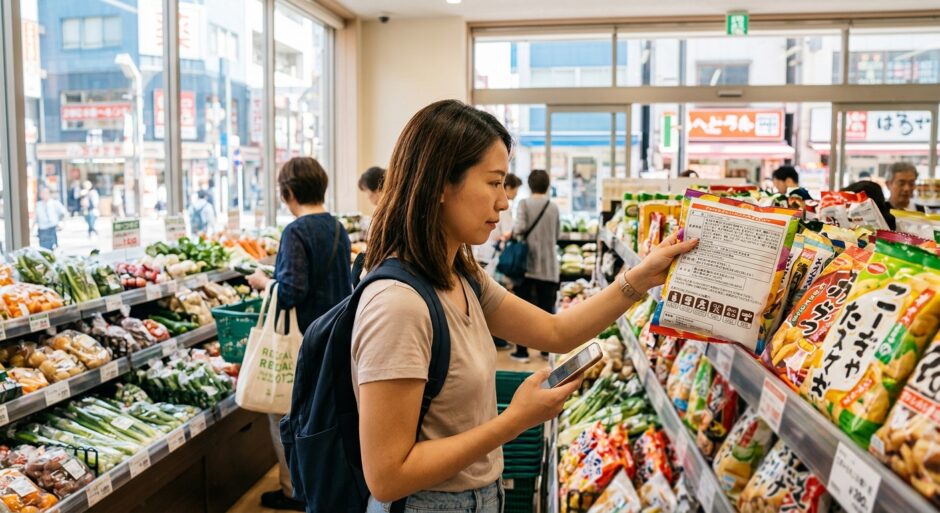
In Japan, the Consumer Affairs Agency mandates that seven specific allergens must be listed if they are present in packaged food. This is your first line of defense. If you see a table or a box on the back of a snack, look for these characters:
💡 Pro-Tip: The “Allergen Table” Hack
Most modern Japanese packaging includes a grid/table of allergens. The ingredients present are usually highlighted in a darker color or marked with a circle (●). If the box for 小麦 (Wheat) is darkened, put it back on the shelf!
🔍 Identifying Hidden Gluten Sources
Gluten in Japan isn’t just in bread (pan). It’s often hidden in thickeners, seasonings, and traditional drinks. For example, Mugi-cha (Barley Tea) is served everywhere in summer—it’s caffeine-free, but it’s pure barley juice. Not safe for Celiacs!
🌾 Barley and Rye (The Hidden Cousins)
- Barley: 大麦 (Oomugi)
- Rye: ライ麦 (Raimugi)
- Malt: 麦芽 (Bakuga)
🧪 Real-World Insight: The Soy Sauce Paradox
In a major food processing plant in Chiba Prefecture, traditional soy sauce (shoyu) is brewed using a mix of soy and wheat. While the long fermentation process often breaks down gluten to levels below 20ppm, Japanese law still requires the 小麦 (Wheat) label. However, for those with severe allergies, this distinction is vital. Always look for たまり醤油 (Tamari Shoyu) which is traditionally wheat-free, but check the label for “wheat-free” (小麦不使用) to be 100% sure!
🍱 Restaurant Survival Hacks
Eating out is where it gets tricky. Many chefs use “Dashi” (soup stock) containing soy sauce or bonito flakes processed with wheat. When in doubt, use these specific phrases.
Japanese Word of the Day
アレルギーです
[Allergy-desu]
“I have an allergy.”
Example: Komugi allergy-desu. (I have a wheat allergy.)
⚠️ Manner Alert: The “Card” Strategy
Japanese culture values clarity. Simply saying “I’m allergic” can sometimes lead to confusion or the “cross-arms X” of refusal. Carry a printed Allergy Card (written in Japanese) that lists exactly what you cannot eat. This allows the kitchen to check their ingredients without the language barrier stress.
🛒 The “Contains” vs. “May Contain” Distinction
Japan has two tiers of labeling. The “Big 7” mentioned above are mandatory. However, there are 21 other ingredients (like soy, sesame, and chicken) that are only recommended.
- Soybeans: 大豆 (Daizu)
- Sesame: ごま (Goma)
- Gelatin: ゼラチン (Zerachin)
🤔 Frequently Asked Questions
Q: Is Miso paste gluten-free?
A: Not always! Most miso is made from rice (Kome-miso), but some use barley (Mugi-miso). Look for the 小麦 (Wheat) or 大麦 (Barley) kanji on the label.
Q: Are there dedicated gluten-free stores in Japan?
A: Yes, mainly in Tokyo (look for “Gluten-Free T’s Kitchen” in Roppongi) and Kyoto. However, specialized shops are still rare compared to Western countries.