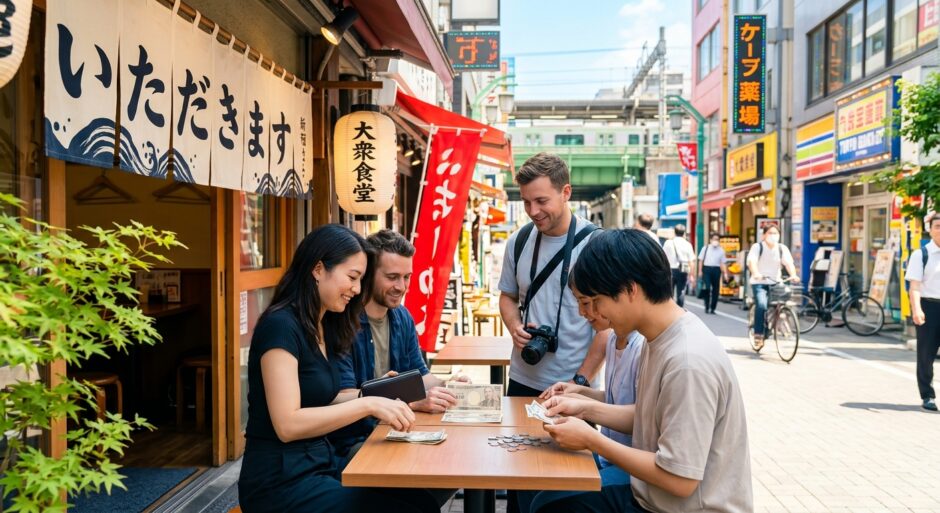

🌸 You’ve just finished an incredible meal of sizzling Wagyu, delicate sushi, or steaming ramen with your travel crew. The atmosphere was perfect, the service was impeccable, and everyone is smiling. Then, the bill arrives. 🧾
In many Western countries, the immediate instinct is to look at the server and ask, *”Can we do separate checks?”* But in Japan, this simple request can trigger a wave of silent panic, create a massive bottleneck at the register, and—worst of all—mark you as a “clueless tourist.” 🛑
Welcome to **Japan Hacks**. Today, we’re diving into the cultural “why” and the technical “how” of paying for groups. We’re going to turn you into a payment pro so you can exit any restaurant with the grace of a local.
—
🇯🇵 Quick Hack Summary
- ✅ One Bill Rule: Most traditional and busy restaurants are not set up for split billing.
- ✅ Efficiency is King: Japanese service is built on speed; splitting checks breaks the “flow.”
- ✅ The Pay Master: Designate one person to pay the full amount and settle up later.
- ✅ Cash is (Still) Queen: Especially for group “settle-ups” in izakayas.
(High Effort)
—
## 🏯 The Cultural “Why”: It’s Not Just About the Math
In Japan, the concept of **Omotenashi** (wholehearted hospitality) isn’t just a one-way street from the server to you. It’s a social contract. As a guest, you are expected to respect the “wa” (harmony) of the establishment.
When a group of five asks for separate checks at a busy Izakaya at 8:00 PM:
1. **The POS System Meltdown:** Many older Japanese Point-of-Sale systems literally cannot split a single table’s order into five credit card transactions.
2. **The Line of Death:** Japanese restaurants are often cramped. If you spend five minutes sorting out who had the highball and who had the oolong tea at the register, you are physically blocking other hungry locals from entering or leaving.
3. **The Labor Burden:** Staff are trained to be lightning-fast. Forcing them to process five separate transactions is seen as extremely “mendokusai” (troublesome).
—
📊 Checkout Efficiency (Time in Minutes)
45 Seconds
6-8 Minutes
—
## 🍱 Where It’s Okay vs. Where It’s A “No-Go”
Not all restaurants are created equal. Depending on where you are, the rules of the game change.
—
別々で
(Betsu-betsu de)
“Separately, please.” (Use only in emergencies!)
—
## 💡 The “Pay Master” Strategy: How to Pay Like a Pro
The smartest way to handle a group dinner is to nominate a **Pay Master** before the meal even begins. Here is the step-by-step Japan Hacks guide to seamless group payment:
### 1. The “Single Payer” Approach
One person puts the entire bill on their credit card. This is the fastest method. While the Pay Master is paying at the register, the rest of the group should wait **outside** the restaurant to avoid crowding the doorway.
### 2. The “Table Settle”
While still sitting at the table, use your phone calculator to find the total per person. Everyone gives their cash to the Pay Master. The Pay Master then takes the stack of cash to the register and pays once.
### 3. Use an App
Apps like **Splitwise** are your best friend in Japan. Don’t worry about paying each other back in the moment. Just log who paid what, and settle the “big debt” at the end of your trip.
💡 Pro-Tip: The Rounding Hack
To avoid dealing with tiny 1-yen or 5-yen coins, always round up to the nearest 100 or 500 yen when paying your friend back. If the bill is 2,430 yen each, just give them 2,500. It covers the tax, the “Otoshi” (table charge), and makes life easier!
—
## ⚠️ Common Pitfalls to Avoid
⚠️ Manner Alert!
Don’t dump a pile of coins on the tray. While it might seem like you’re helping by giving exact change, counting 50 tiny coins is stressful for the staff. If you have that much loose change, use it at a 7-Eleven self-checkout machine instead!
### The “Otoshi” Surprise 🥜
In many Izakayas, you will be served a tiny appetizer you didn’t order. This is called **Otoshi**, and it acts as a mandatory table charge (usually 300–500 yen per person). When splitting the bill mentally, don’t forget this! If you try to argue that “we didn’t order this,” you will create an awkward situation. It is part of the Japanese dining culture.
### Cash vs. Card: The 2024 Reality 💳
While Japan is becoming more card-friendly, many “hole-in-the-wall” gems remain **Cash Only**. If you are the Pay Master, always ensure you have enough yen to cover the whole group in case their credit card machine is “down” (or non-existent).
—
## 🍜 Conclusion: Be the Guest They Want Back
Paying for a group in Japan isn’t just about the transaction; it’s about maintaining the smooth, quiet efficiency that makes Japanese society so pleasant. By paying as one unit, you’re telling the staff: *”I value your time and the flow of your restaurant.”*
Next time the bill hits the table, don’t reach for your individual wallets. Give a nod to your “Pay Master,” step outside to wait in the cool evening air, and enjoy the satisfaction of knowing you’ve mastered a subtle but vital piece of Japanese etiquette.
**Happy dining, and stay smart!** 🇯🇵