
Imagine this: You’re walking through the crisp morning air of Shinjuku or the quiet backstreets of Kyoto. The city is waking up, and while most tourists are still hitting “snooze” or waiting for the 10:00 AM museum opening, you’ve just unlocked the ultimate “Japan Hack.”
For the price of a single cup of coffee, you’re handed a thick slice of buttery toast, a perfectly boiled egg, and perhaps a side of sweet red bean paste—all for **free**.
Welcome to the world of **”Morning Service” (モーニング)**. In Japan, the hour between sunrise and 11:00 AM isn’t just a time of day; it’s a golden window of extreme value, local culture, and high-carb happiness. But if you show up at 11:01 AM? The magic disappears.
🇯🇵 Quick Hack Summary
- ✅ The Rule: Order a drink before 11:00 AM to get complimentary or heavily discounted food.
- ✅ Top Spot: Komeda’s Coffee is the undisputed king of the “Nagoya-style” morning.
- ✅ Hidden Gem: Local Kissaten (traditional cafes) often offer the most authentic atmosphere.
(Super Easy)
## 🍞 What is “Morning Service”? ☕
In the West, breakfast is a meal you buy. In Japan, “Morning Service” is a gift you receive for being an early bird. Originating in the industrial city of Nagoya in the 1950s, cafe owners wanted to reward hardworking salarymen. The deal was simple: buy a coffee, and the “service” (toast and an egg) is on the house.
Today, this has evolved into a nationwide phenomenon. While some global chains have moved toward “Morning Sets” (discounted bundles), the soul of the Japanese morning still lives in the **11 AM Cutoff**.
モーニング
(Mo-ningu)
“Morning” — Specifically referring to the breakfast specials served until 11 AM.
## 🏰 The Big Three: Where to Find the Best Deals 🗺️
If you’re looking for reliability and that classic “shokupan” (fluffy Japanese milk bread), these chains are your best friends.
### 1. Komeda’s Coffee (The Gold Standard)
Komeda’s is the most famous purveyor of Nagoya-style morning service. When you order any drink (coffee, tea, or even a soda), you choose from three options:
* **A-Set:** Boiled egg and toast.
* **B-Set:** Egg salad and toast.
* **C-Set:** Ogura-an (sweet red bean paste) and toast.
### 2. Hoshino Coffee (The Premium Choice)
Known for their hand-drip coffee and retro-chic leather booths. Their morning service usually includes a smaller portion of their famous thick-cut toast or a mini pancake. It feels more “high-end” without the high-end price tag.
### 3. Doutor & St. Marc Cafe (The Urban Quick-Fix)
These are more “European style.” They don’t usually give food for free, but they offer “Morning Sets” where a sandwich and coffee cost about ¥450—significantly cheaper than buying them separately after 11:00 AM.
📊 Cost Comparison (Approximate)
¥1,200
¥500
## 🍱 Chain vs. Local: The Morning Showdown ⚔️
Should you go to a flashy chain or a dusty local *Kissaten*? Here is how they stack up:
💡 Pro-Tip:
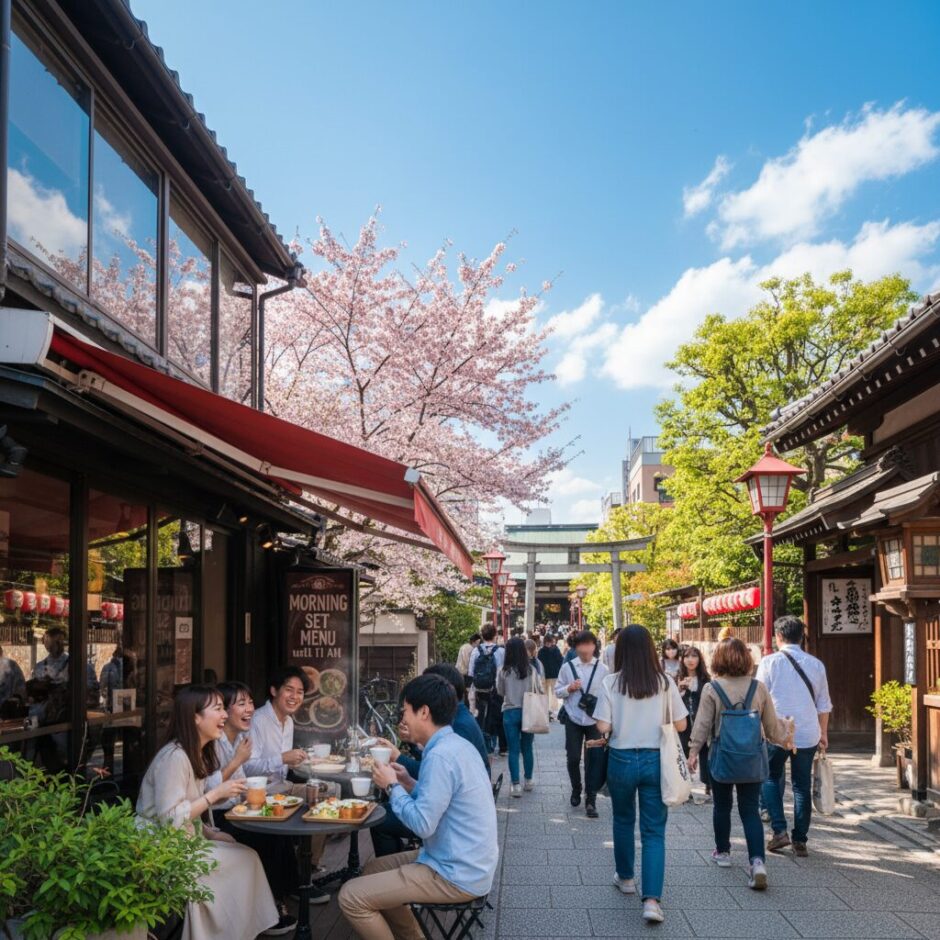
If you’re in a local shop, look for the handwritten blackboard outside that says “モーニング” followed by a price. If it’s under ¥600, you’ve found a winner!
## 🕰️ Why 11 AM is the “Magic Hour” 🕚
In Japan, the transition from breakfast to lunch is sharp. At exactly 11:00 AM, the kitchen staff switches gears. The Morning Service signs are tucked away, and the prices for that same toast and egg suddenly triple as they become “side orders.”
**The Hack:** Arrive at 10:45 AM. You can order your Morning Service deal, enjoy the low price, and then sit through the lunch rush without paying lunch prices. It’s the perfect time to plan your day, write in your journal, or edit those Instagram photos of the cherry blossoms.
⚠️ Manner Alert!
While lingering is generally okay, if you see a line forming outside during the 12:00 PM lunch rush, it is polite to finish up and vacate your seat. Hospitality (Omotenashi) goes both ways!
## 🍓 Don’t Forget the Regional Twists! 🗾
While Nagoya is the heart of morning service, other cities have their own spin:
* **Kyoto:** Look for “Smart Coffee” or “Inoda Coffee.” Their morning sets often feature high-quality ham and specialized “Kyoto-style” dark roasts.
* **Osaka:** Osaka cafes often add a side of fruit or a small yogurt to their morning sets to compete with the sheer density of cafes in the city.
* **Nagoya (The Origin):** If you are actually in Nagoya, some shops go crazy—offering miso soup, noodles, or even curry as part of their “Morning Service.”
## 🚶 How to Master Your First “Morning” 🏁
1. **Find the Sign:** Look for the word **モーニング** or **Morning** on a sandwich board outside.
2. **Check the Time:** Is it before 11:00 AM? You’re good to go.
3. **Order the Drink First:** Usually, you choose your coffee/tea first, and then the server will ask, “Morning?” (meaning: do you want the set?).
4. **Choose Your Topping:** In chains like Komeda, choose your spread (Butter, Jam, or Ogura-an).
5. **Enjoy:** Relax with the morning newspaper (even if you can’t read it) and soak in the local atmosphere.
### The Value of the “Quiet Morning”
Beyond the yen saved, the Morning Service offers a glimpse into Japanese life that you won’t see at the Robot Restaurant or Tokyo Disneyland. You’ll see retired couples sharing a newspaper, students cramming for exams, and office workers taking a breath of peace before the grind. It is the most “human” part of the Japanese day.