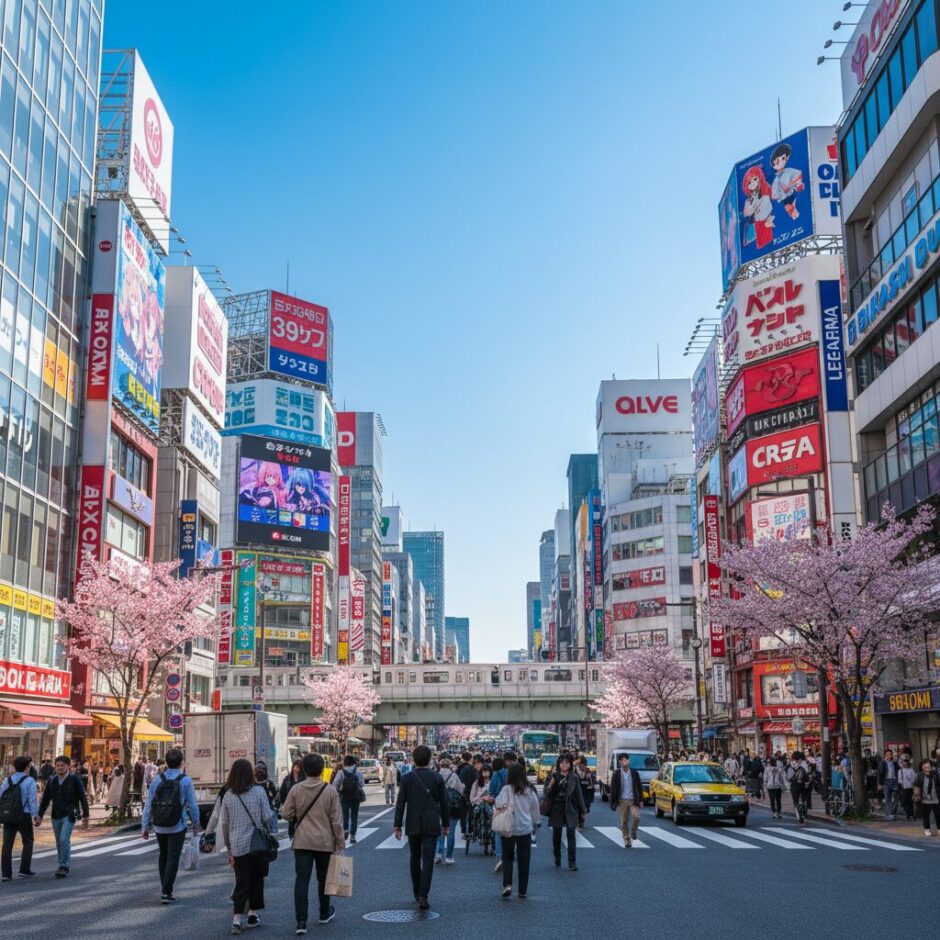

Walking into a Japanese electronics megastore like Bic Camera, Yodobashi Camera, or Yamada Denki is a sensory explosion. Neon lights flash, six different theme songs play at once, and floor-to-ceiling shelves groan under the weight of the latest tech gadgets. It feels like a futuristic playground! ⚡🏯🌸
But beware: these temples of technology are designed to make you part with your Yen faster than a Shinkansen zooms past Mt. Fuji. While Japan is famous for quality, many travelers fall into avoidable traps that turn a “great deal” into an expensive mistake. As your Japan Hacks Creative Director, I’m here to ensure your suitcase returns home full of tech—and your wallet stays surprisingly heavy.
🇯🇵 Quick Hack Summary
- ✅ Stack Your Savings: Never settle for just “Tax-Free”—always look for the extra 5-7% discount coupons.
- ✅ Voltage Check: Japan runs on 100V. Buying the wrong specs means your device might fry (or never turn on) back home.
- ✅ The “Point” Trap: Skip the point cards; as a tourist, cash discounts are your only real friend.
(Easy – Just requires a little prep!)
1. The “Tax-Free Only” Blunder 🎟️
Most tourists know that if they spend over 5,000 JPY and show their passport, they get the 10% consumption tax waived. This is a great start, but it’s Mistake #1. In the world of Japan Hacks, “Tax-Free” is the baseline, not the goal.
Major stores like Bic Camera and Edion partner with banks (Visa, Mastercard) and travel sites to offer “Tax-Free + X%” coupons. Usually, this is an additional 5% or 7% off the tax-free price. If you’re buying a 150,000 JPY camera, missing that 7% coupon is like throwing 10,500 JPY ($70 USD) into the Kanda River!
📊 Potential Savings on a ¥100,000 Laptop
¥110,000
¥100,000
¥93,000
*The difference covers a high-end sushi dinner! 🍣
💡 Pro-Tip:
Before you head to the register, search Google or Facebook for “Bic Camera Coupon” or “Yodobashi Visa Promo.” Often, you just need to show a QR code on your phone!
2. Ignoring the “Voltage Vacuum” 🔌
This is perhaps the most heartbreaking mistake. You find a sleek, high-tech Zojirushi rice cooker or a Panasonic hairdryer for half the price it costs back home. You buy it, fly back to London or Sydney, plug it in, and—*POP*—it lets out the magic blue smoke.
Japan operates on 100 Volts (50/60Hz). Most of the world (Europe, Australia, Asia) uses 220-240V. Even the USA (120V) can be risky for delicate heating elements. If the device isn’t “Global Voltage” (100V-240V), it will fail without an expensive transformer.
⚠️ Manner Alert!
Don’t assume the staff will warn you. Many megastores have a dedicated “Tourist/Export” corner. Items found elsewhere in the store are almost always meant for domestic use only. Check the label for “100-240V”!
3. The “Point Card” Mirage 💳
If you’ve spent more than five minutes in a Japanese store, you’ve been asked: “Pointo kaado wa omochi desu ka?” (Do you have a point card?).
Locals love these. Yodobashi Camera, for instance, often gives 10% back in points. Buy a ¥100,000 camera, get ¥10,000 in points to spend on lenses. Sounds great, right? Wrong for tourists.
In most stores, you cannot use the 10% Tax-Free benefit AND earn points at the same time. Usually, you have to choose. Furthermore, points are often locked for 24 hours before they can be used. Unless you live in Japan or are visiting for a month, those points are useless digital dust. Always opt for the immediate Tax-Free discount and coupon stack instead.
免税
(Men-zei)
“Tax-Free” — This is what you say at the register to save that 10%!
4. Forgetting the “Price Match” Protocol 📉
Japanese electronics stores are highly competitive. They expect you to compare. If you find a lower price on Amazon Japan or a rival’s website, many stores will match it—but they won’t offer it voluntarily.
The secret weapon here is Kakaku.com. This is Japan’s premier price-comparison site. If the store price is ¥55,000 but Kakaku shows it for ¥48,000 at a competitor, show the screen to the clerk. While they might not always match the absolute lowest online-only price (since they have huge rent to pay), they will often bridge the gap or throw in a freebie (like a SD card or a case).
5. Buying Accessories at the Megastore 🎧
You’ve just bought a beautiful Sony mirrorless camera. The helpful clerk suggests a protective filter, an HDMI cable, and a carrying bag. Stop right there.
This is where megastores make their highest profit margins. The markup on small accessories is astronomical. A basic HDMI cable at a megastore might cost ¥2,500, while the exact same quality cable at Daiso (the 100-yen store) or Don Quijote might be ¥500 or less.
Unless it is a brand-specific accessory (like a Sony battery), skip the “add-ons” at the big electronics stores. Take a 5-minute walk to a 100-yen shop or a “Hard-Off” (second-hand) store for your cables, cases, and screen protectors.
💡 Pro-Tip:
Check the “Wagon Deals” near the elevators. These are often clearance accessories (cases for last year’s iPhone, etc.) that are actually priced reasonably!
Final Thoughts: The “Japan Hacks” Mindset 🧘♂️
Japan’s electronics stores are a highlight of any trip, offering gadgets you didn’t even know existed (Heated toilet seats with built-in music? Yes, please!). By avoiding these five mistakes, you aren’t just saving money; you’re traveling with the savvy of a local.
Remember: Passport ready, Coupon loaded, Voltage checked. Now go forth and conquer Akihabara!